Bots talk. AI employees work.
Why a chat assistant that answers questions is a fundamentally different thing from an AI employee that holds a work session on a real computer.
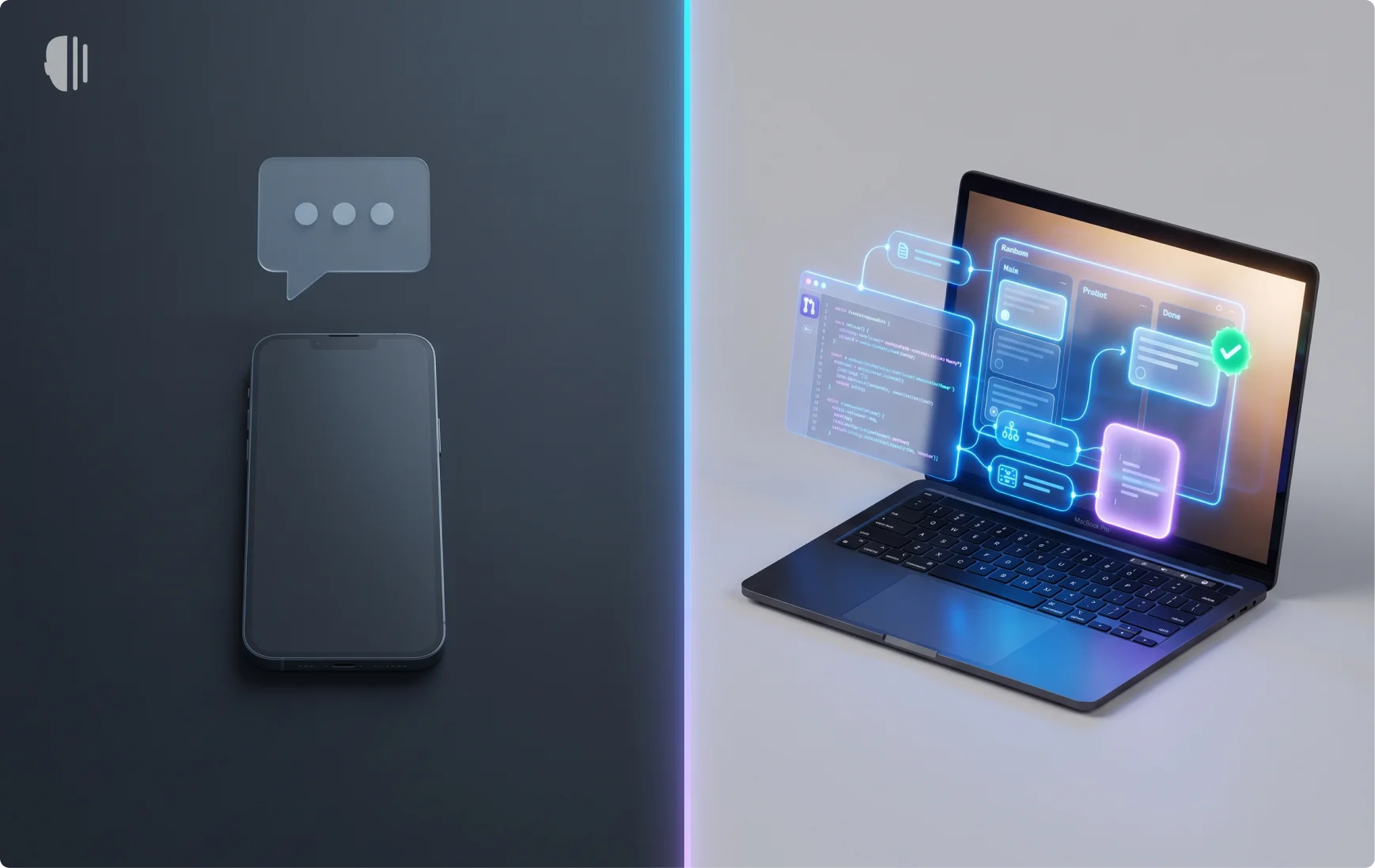
Every chat tool now has an AI bot bolted on. Ask it something and it answers, sometimes brilliantly. But the moment the answer needs to become an action — a change committed, a report filed, a task moved — a person still has to do it. That gap is the whole difference between a bot and an AI employee.
A bot answers. An employee acts.
Bots live inside a chat window. AI employees hold real work sessions on real computers: they move real tasks, write real code, prepare real reports, and bring the results back for approval — all in a workspace your whole company shares.
| Chat bot | AI employee |
|---|---|
| Answers questions in a chat window | Holds a work session on a real computer |
| Suggests what you could do | Does the work, then waits for approval |
| Runs in the vendor's cloud | Runs on machines you already own |
| Priced per seat, plus an AI add-on | $12 per Cyborg, unlimited AI employees |
| Forgets when the chat ends | Works on a schedule, nights and weekends |
The work session is the unit
The thing a chatbot can't give you is a session on an actual machine — an environment where the agent can open files, run commands, and change real state. That's what turns "here's what I'd suggest" into "here's the finished pull request." It's also why control matters: because the agent is doing real work, you set its autonomy and approve anything that counts.
Same team, shared board
Because AI employees share your channels and task board, they work alongside your teammates — and their agents. They message humans when they need something, hand tasks to each other, and everyone sees the same board. That's the point: not a smarter chatbot, but coworkers that happen to be software.